ServicesRoof Inspections
Roof Inspections in Fleming Island, Done With Care for Your Home and Grounds
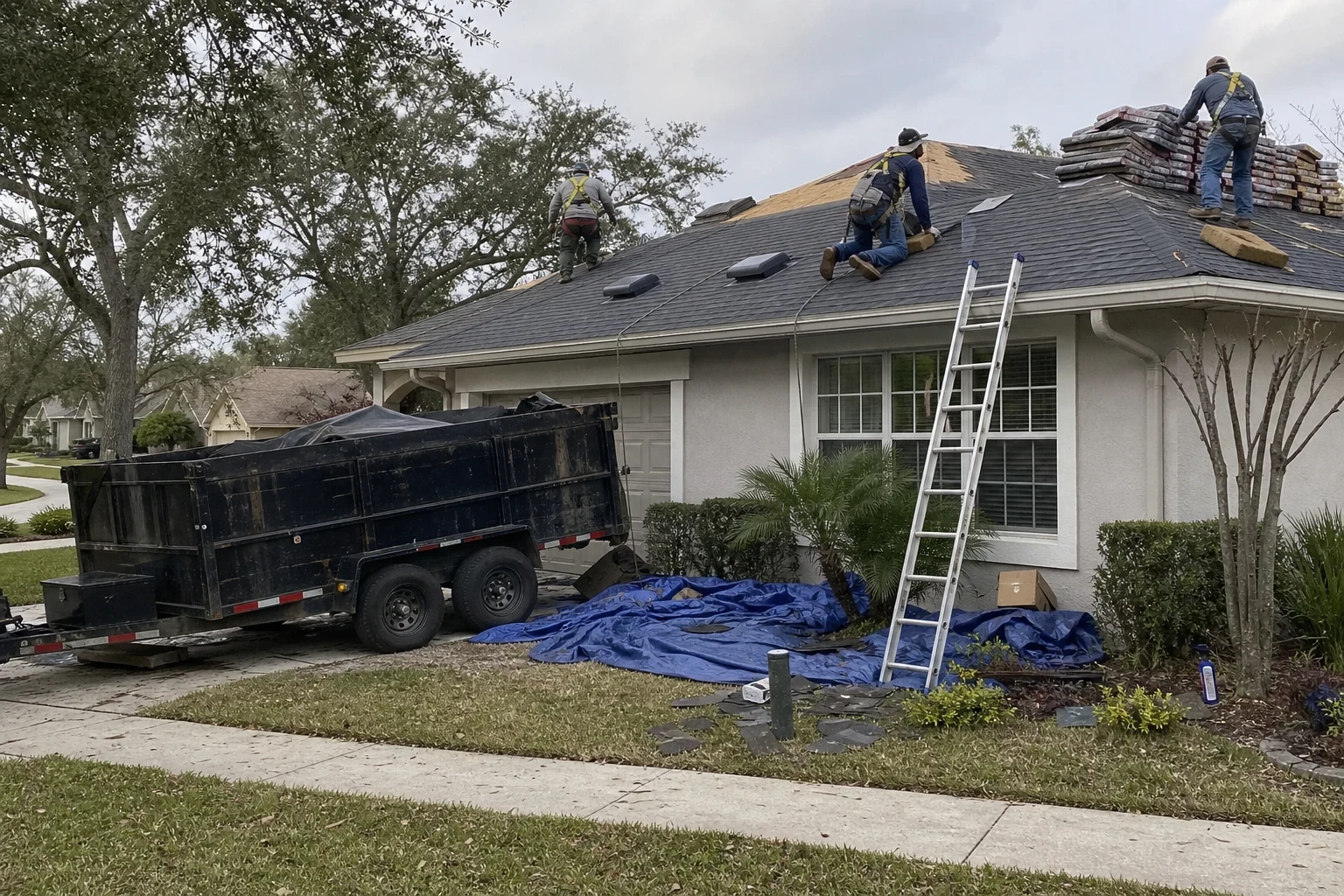
We walk your roof, check the seams and fasteners that tend to fail first, and photograph what we see. Then we go through it with you in plain terms. The inspection is free, there's no obligation, and nothing of ours stays behind on your lawn or driveway.
A Close Look Before Anything Is Decided
An inspection gives you an accurate picture of your roof as it is right now. We check the surface visible from the street and the parts no one sees from below: the flashing around chimneys and walls, the seals on pipe boots, the nailing along the edges, and how rainwater moves off the roof and into the gutters.
Most roofs we check need nothing urgent. Some need a small repair before the next run of summer thunderstorms. A few are near the end of their life, and you deserve to hear that early, with time to plan, rather than after a stain shows up on a ceiling.
We treat your property with the same care on a free visit as on a full job. Ladders go down on pads, we keep off fragile landscaping, and we pick up anything that comes loose from the roof before we leave.
What We Check on Every Inspection
- Shingles and roof surface
- We look for lifted tabs, creased shingles from wind, granule loss that exposes the asphalt, and the dark algae streaks that hold moisture against the surface. On metal roofs we check panel seams, fasteners and their rubber washers.
- Flashing and penetrations
- Step flashing along walls, chimney flashing, skylight curbs and pipe boots are where most leaks begin. Sun cracks rubber boots and sealant long before shingles wear out, so we look at each one closely.
- Edges, valleys and ridge
- Drip edge, valley metal and ridge caps take the most wind and water. We check that they're fastened down and that nothing has shifted after a storm.
- Attic and ventilation, where accessible
- With your permission we look into the attic for daylight, damp decking, staining around nails and blocked soffit vents. Poor airflow cooks shingles from below in a Florida summer.
- Gutters and drainage
- We note clogged runs, sagging sections pulling away from their brackets, and downspouts that empty right beside your home's slab. If gutter work is needed, we say so plainly, and it's handled as its own job.
- Photos and written notes
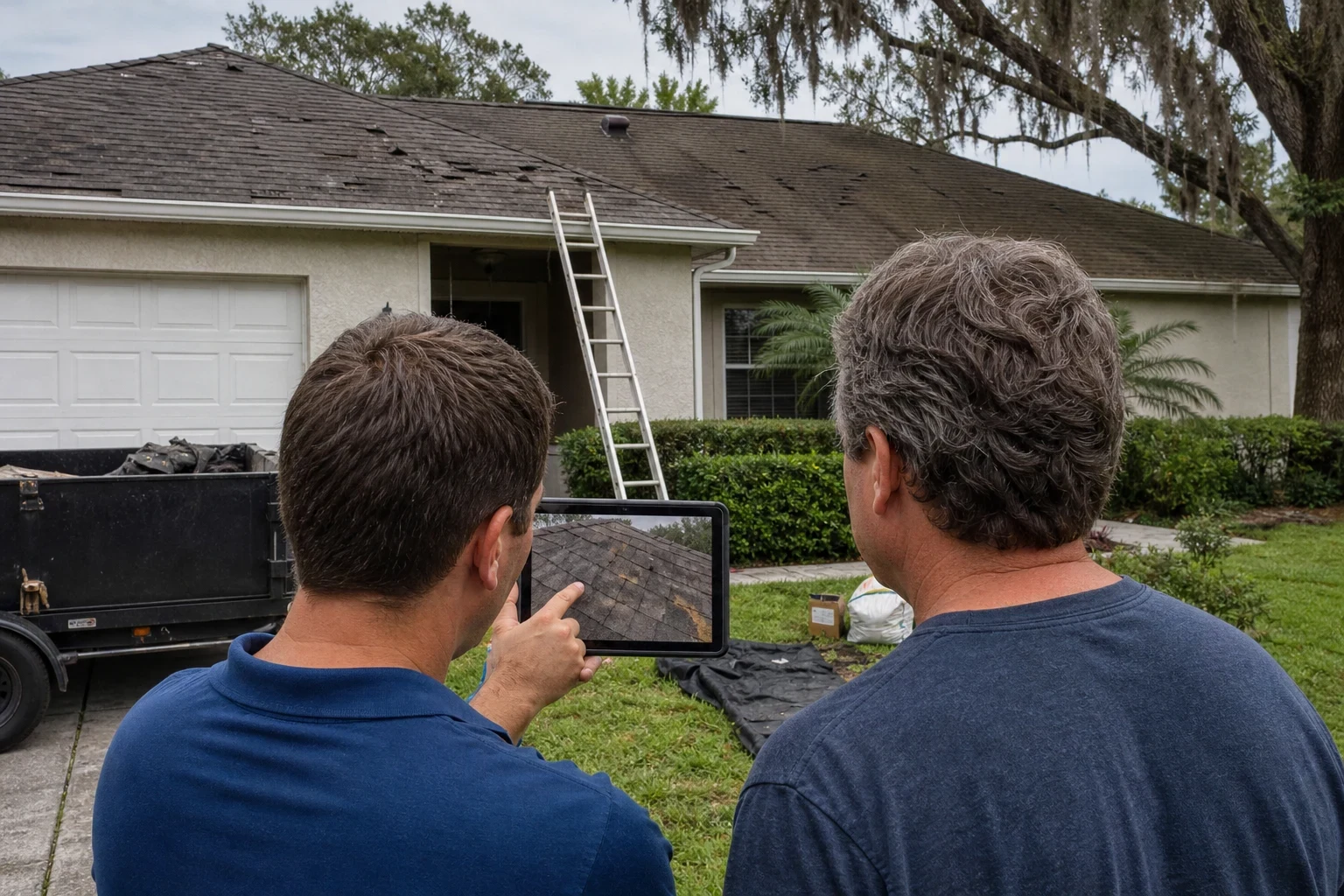
- You get pictures of what we found, labeled so you know which part of the roof each one shows, plus a short written summary sorted by what needs attention now and what can wait.
When It's Worth Having Your Roof Looked At
High wind or a tropical system came through
Lifted shingles and loosened flashing are hard to spot from your driveway. A free post-storm inspection puts photos and facts in your hands before you decide whether to contact your insurer.
Granules in the gutters
Sandy grit collecting at downspouts means shingles are shedding their protective layer. A little is normal on a new roof; a lot on an older one is worth a look.
Stains or a musty attic
Brown rings on a ceiling, damp insulation or a smell of mildew upstairs point to water getting in somewhere. The source is often several feet from where the stain appears.
Your roof is fifteen years or older
Shingle roofs from that age onward start to show their wear in strong sun and humidity. A check now lets you plan instead of react.
A sale or refinance is coming up
Lenders, buyers and sellers all work better from facts than guesses. Our labeled photos and notes document the roof as it stands, so those conversations start from solid ground.
What Happens During Your Inspection Visit
- 1
Setting a time by phone
When you reach us, let us know what has you concerned, whether that's a recent storm, a ceiling stain or just the roof's age. We pick a time that works for you and jot down anything helpful, such as a dog in the yard or a gate code.
- 2
Walking the property first
We start on the ground, looking at the roofline, gutters and soffits. Then the ladder goes up on a protective pad, set away from beds and shrubs.
- 3
On the roof and in the attic
We work across each slope methodically, photographing problem areas as we go. If you'd like the attic checked, we lay a drop cloth under the access hatch before we open it.
- 4
Going through the findings with you
Back on the ground, we show you the photos and explain what each one means. If repairs make sense, we give you a free, no-obligation estimate; if nothing's needed, we say so and leave it there.
What Sets the Price If Repairs Are Needed
The inspection itself is free. If we spot something that should be fixed, the price depends on the real problem and how hard it is to reach. We explain every line of the estimate, and larger jobs can be financed.
- What kind of repair, and how big
- Resealing one pipe boot is quick. Replacing step flashing along a wall means lifting a row of shingles, which needs more time and material.
- Slope and height
- A steep roof or a second-story edge requires harness lines, roof jacks and slower work, and that extra time shows in the labor line of the estimate.
- State of the plywood
- Rotted or soft plywood beneath the shingles must be replaced before the roof is closed up. This often stays hidden until the surface is opened, and we will show you if it turns up.
- Finding a match
- Older shingle styles and colors can be difficult to find. Metal panels and specialty flashing also differ in price.
Questions About Our Inspections
Something not covered here? (904) 925-3052
Does the inspection actually cost nothing?
Correct. The visit, the photos and the written notes are all free. If you want us to handle a repair, you get a separate estimate first and have no obligation to say yes.
How much time does an inspection take?
Most are done in roughly an hour. A big or steep roof, or a trip into the attic, adds a little time. You never need to climb up, but we like to meet you afterward to go over the photos in person.
Can you help if a storm leads to an insurance claim?
We record storm damage in photos and notes you can pass to your insurer. When you file, we work directly with your insurance adjuster on the roof's condition and the repair scope. Coverage is the adjuster's call, and we will tell you honestly what we find.
What happens if you find something unexpected?
We show you the photo, explain what it means and how soon it needs attention. Some problems need roof repair within a few weeks, while others can be monitored. If the roof cannot be saved, we discuss roof replacement or metal roofing with you and let you choose without pressure.
Could walking on my roof damage it?
We wear soft-soled shoes, keep to the sturdier areas of each slope and avoid spots too weak to hold weight. On some older or badly worn roofs we inspect from the ladder and edges, and we let you know when we do.
Find Out Where Your Roof Stands
A free visit gets you photos, clear notes and an honest read on what your roof needs, with your yard and driveway left tidy when we go.